Listen Now
Six guided sessions — press play, no sign-up needed. These recordings are invitations, not instructions. Nothing here needs to be followed exactly, only listened to, and left when it is no longer needed. They grew out of long personal practice and a quiet interest in what actually helps, and what lasts.
All Shall Be Well
A quiet space to slow down and turn gently inward. Using the image of the sea as a mirror, this meditation invites you to notice the deeper movements within your own inner landscape — calm and restlessness, light and shadow — with openness and without judgement.Through gentle guidance and periods of silence, it explores themes of trust, self-awareness, and compassion — encouraging a release of striving and a growing confidence in the deeper wisdom already present within.
Read transcript
Before we begin, take a moment to settle, like standing quietly at the edge of the sea.
The sea has often been described as a mirror, reflecting something of the deeper movements within us. Its changing surface can reveal calm, restlessness, light, and shadow, much like the inner landscape of our own lives.
In this meditation, we will sit quietly with that image, allowing the sound of the ocean to accompany us as we turn gently inward. There is nothing to achieve and nothing to force. Simply an invitation to notice, to reflect, and to rest for a while.
As you listen, there will be gentle guidance and periods of silence. You may simply follow along in your own way, allowing the pauses to be a space to rest.
Find a comfortable place to sit. Allow your body to settle. Your feet resting on the floor or your legs gently folded. Your hands resting easily in your lap. Let your spine be upright but relaxed.
Take a long, slow breath in and gently breathe out. Another slow breath in and slowly breathe out. Allow the breath to return to its natural rhythm. Nothing to achieve, nothing to fix. Just sitting.
Bring your attention to your breathing. Air entering, air leaving. Feel the quiet rhythm of the body. Notice the weight of your body supported by the chair or the ground beneath you. Let your shoulders soften. Let your jaw unclench. Allow the muscles of the face to relax. Breathing in, breathing out. Simply arriving in this moment.
Now, continue to follow the breath.
(Silence for several minutes)
Now bring to mind a gentle truth. You do not need to control every outcome. You are not responsible for holding the whole world together. You do not need to control every outcome. There is something larger than you. Allow yourself to rest in that. Let the burden fall away, even if just for this moment.
(Silence for several minutes)
Now bring attention to another quiet truth. You are loved. Not because of what you achieve, not because you prove yourself—simply because you exist.
Let these words settle slowly: "I am loved. I have everything that I need." If you wish, repeat them inwardly: "I am loved. I have everything that I need."
(Silence for several minutes)
Perhaps for many years you have looked outward for authority, looking for approval, waiting for someone to say that you are doing it right. But slowly, another awareness begins to grow. There is wisdom within you, a quiet inner knowing. You are learning to trust yourself, learning to listen to the deeper voice within. Let that awareness rest gently in you.
(Silence for several minutes)
Part of learning to trust yourself is also learning to see yourself clearly. There are parts of each of us that remain hidden, parts we would rather not see. Old fears, old reactions, old wounds. This is sometimes called "the shadow." There is no need to judge these parts. They are simply parts of your story.
For a few moments, allow yourself to notice whatever arises, without analyzing, without fixing—just noticing.
(Silence for several minutes)
If something difficult has come into awareness, hold it gently. Imagine meeting that part of yourself with compassion. The wounded parts of us are not enemies; they are places where love has not yet fully reached. Let them simply be seen. Let them rest in kindness.
(Silence for several minutes)
Beneath the shifting thoughts and emotions, there is something deeper. A quiet center. Your true self. Not the self trying to impress others, not the self driven by fear, but the self rooted in love.
Some experience this as a deeper presence within, a quiet awareness of love already here. Rest there quietly for a while.
(Silence for several minutes)
Now gently turn your attention toward gratitude. Bring to mind one simple thing you are grateful for. It may be something small: a person, a place, a memory. Perhaps light on water, perhaps the quiet rhythm of walking or running. Perhaps simply the gift of this breath.
Allow that one thing to rest quietly in your awareness. Let gratitude rise naturally. If you wish, quietly say inwardly: "Thank you for this moment, for this life."
(Silence for several minutes)
Now allow your awareness to widen. Beyond this room, beyond your own concerns. The universe continues to expand. Stars forming, galaxies slowly moving through immense distances. Life unfolds in cycles. Day and night, seasons turning, generations rising and passing. Some cycles last far longer than a single human life.
You are part of this larger story. Your life is one thread in a vast unfolding tapestry. Let that bring a quiet humility, and also a quiet peace. You do not need to carry everything; you belong to something greater.
(Silence for several minutes)
Solitude is not separation. Silence is not escape. When we return to stillness, we return to others more fully. From the center. From a place of quiet strength. Rest there for a few moments.
(Silence for several minutes)
Bring to mind a final reflection. So many worries come and go, and yet, again and again, something becomes clear. Life continues to unfold. You can walk, you can listen, you can trust.
As Julian of Norwich wrote many centuries ago: "All shall be well. All shall be well and all manner of thing shall be well."
(Silence for several minutes)
As this meditation gently comes to an end, hold a simple intention. Three quiet movements of the heart: To accept. To love. To do.
Accept what is given. Love what is before you. Do what is yours to do.
(Silence for several minutes)
Now begin to notice your breathing again. Feel the body where you are sitting. Perhaps move your fingers slightly. Roll the shoulders gently. Take one deeper breath and slowly breathe out.
When you are ready, open your eyes. Carry this quiet awareness with you. You are loved, and you already have what you need.
A companion poem from Liminal Light
Trusting the ocean, there is no fear of the waves Waves are part of it Ache remembers tears of jelly fish That time I asked if still there and God rose onto two feet with a galloping sound overtaking crashing waves
— The Sea is my Therapist
5 · 4 · 3 · 2 · 1
The five-four-three-two-one technique is a grounding exercise — five things you can see, four you can feel, three you can hear, two you can smell, one you can taste.The senses only ever report on right now. Moving through them deliberately interrupts the loop and brings you back to where you actually are. The sea is a good place for this — the light on water is never the same twice.
Read transcript
The 5-4-3-2-1 technique is a grounding exercise: 5 things you can see, 4 you can feel, 3 you can hear, 2 you can smell, 1 you can taste. We can easily get pulled away from the present into what might happen, or what already has. The senses don't do that. They only ever report on right now. Moving through them deliberately interrupts the loop and brings you back to where you actually are.
The sea is a good place for this. The light on water is never the same twice. The sound shifts constantly. The air has a quality you can actually taste. You don't have to manufacture anything. It's all already there. Let's start.
Find a position that feels stable. Sitting is fine. Feet flat on the floor if you can manage it. Hands resting somewhere comfortable. You don't need to close your eyes. In fact, for now, keep them open. Take one slow breath in through the nose. Let it go without forcing anything. And again. Just letting the breath settle you, not perform for you. When you're ready, we begin.
5 things you can see. Look around you. Not scanning for anything particular. Just noticing what's actually there. Find 5 things. Name them quietly to yourself, one at a time. Don't rush. Take a moment with each one before moving to the next. Notice the colour, the shape, whether the light catches it in any particular way. You're not judging what you see. Just acknowledging it. There it is. That's real. 5 things. Take your time.
4 things you can feel. Now, bring your attention to touch. What is your body in contact with right now? The weight of your legs against a chair or the floor. The texture of fabric under your fingers. The temperature of the air on your face or hands. The firmness of the ground beneath your feet. Find 4 physical sensations. Rest your attention on each one long enough for it to register clearly. You don't need to describe it perfectly. Just feel it. This is here. This is now.
3 things you can hear. Close your eyes if that feels right, or let your gaze soften. Listen. Not for anything dramatic. Just whatever is actually present in the soundscape around you. A distant car. The hum of something electrical. Your own breathing. Wind, if there's any. A voice somewhere. Find 3 sounds. Let each one come forward for a moment before you move to the next. You're not blocking anything out. You're simply noticing what's already there, waiting to be heard.
2 things you can smell. This one asks a little more from you. The sense of smell often needs a moment to surface. Breathe in gently. What's in the air? It might be very faint. Coffee, if there's any nearby. Something from outside. The neutral smell of a room. Your own skin, even. Find 2 things, or as close to two as you can. If nothing is obvious, just notice the quality of the air itself. Fresh or stale, cool or warm. That counts.
1 thing you can taste. Finally, one. What is in your mouth right now? The aftertaste of a drink, or simply the natural taste already there. The faint remnant of whatever you last ate. Whatever is there, acknowledge it. One thing. Present. Real.
Returning. Take a breath. You've just travelled through your senses one by one, not to escape anything, but to come back. Back to the room, back to your body, back to this moment, which is the only moment you're actually in. Wiggle your fingers. Feel your feet on the ground. When you're ready, return, and carry on as we close this exercise.
A companion poem from Liminal Light
The ocean is always in view, the changing colours, the sky never the same. Its beauty is not in scarcity, but in abundance. Yet the waves hide the dolphins, the whales, the seals. Yet, we know, that they are there.
— Scremerston
Yoga Nidra
Yoga Nidra — yogic sleep — is a guided practice of conscious deep rest. You lie still, eyes closed, led to the threshold between waking and sleeping: a state where the body is completely at rest but awareness remains gently present.Moving slowly through the body, this practice releases held tension layer by layer — physical, emotional, mental — without effort or striving. There is nothing to do except receive the guidance.
Read transcript
Let's begin by finding a comfortable position, lying down. Allow your body to be fully supported. You may lie on your back or in any position that feels natural for sleep. Let your eyes gently close.
The sound of the sea will accompany you, steady and unhurried. This practice is known as Yoga Nidra, a form of guided rest. The body can sleep, while the mind rests quietly. There is nothing you need to do, no effort to make. Simply follow the guidance, and if you drift into sleep, that is perfectly natural. Allow yourself to be carried.
Begin by noticing your body as a whole. The weight of it, the shape of it resting. Feel the points of contact: head, shoulders, arms, back, legs. Let the body settle a little more, as though the earth is gently holding you.
Now bring to mind a simple intention, a quiet phrase, something kind and true. You might use "I am at rest," or allow your own words to come. Whatever feels honest and simple. Hold that phrase gently. Repeat it softly within, three times.
Bring awareness to the right hand. Right thumb. Index finger. Third finger. Fourth finger. Little finger. Palm of the hand. Back of the hand. Wrist. Forearm. Elbow. Upper arm. Shoulder. Right side of the chest. Waist. Hip. Thigh. Knee. Calf. Ankle. Heel. Sole of the foot. Top of the foot. Right big toe. Second toe. Third toe. Fourth toe. Little toe.
Bring awareness to the left hand. Left thumb. Index finger. Third finger. Fourth finger. Little finger. Palm. Back of the hand. Wrist. Forearm. Elbow. Upper arm. Shoulder. Left side of the chest. Waist. Hip. Thigh. Knee. Calf. Ankle. Heel. Sole of the foot. Top of the foot. Left big toe. Second toe. Third toe. Fourth toe. Little toe.
Now the back of the body. Head. Shoulder blades. Lower back. Hips. Back of the legs. Heels. Now the front of the body. Forehead. Eyes. Jaw. Chest. Abdomen. Legs. Now the whole body together. Rest in the sense of the whole body.
Bring your attention to the breath. No need to change it, simply notice the rise and fall of the body. Breathing in, breathing out. Allow the breath to soften, as though it is breathing itself. You may gently count backwards from ten to one with each breath out. Ten... Nine... Eight... Continue. If you lose count, there is no need to start again. Simply rest.
Now notice the feeling of heaviness. The body sinking. Heavy. Supported. Now lightness. As though the body is floating. Light. Spacious. Now warmth. A gentle warmth spreading through the body. Now coolness. Soft and refreshing. Let both sensations settle, and beneath them, simply rest. Nothing to do. Nowhere to go.
Now allow simple images to arise. A quiet shoreline at dusk. The sea moving slowly. The light fading into soft grey. The surface of the water reflecting the sky. Still. Then moving. Walking slowly by the sea. Feet touching the ground. The sound of waves repeating again and again. Unhurried. A sense of being held. Nothing to carry.
Gently return to the breath. Soft. Effortless. The body deeply at rest. Now bring back your intention, the same simple phrase. Repeat it quietly three times.
Now let go of the guidance. Let the words fade. Allow the body to rest completely. If sleep comes, let it come. If awareness remains, simply rest. The sound of the sea continues. Steady. Unchanging. There is nothing more to do. Simply rest.
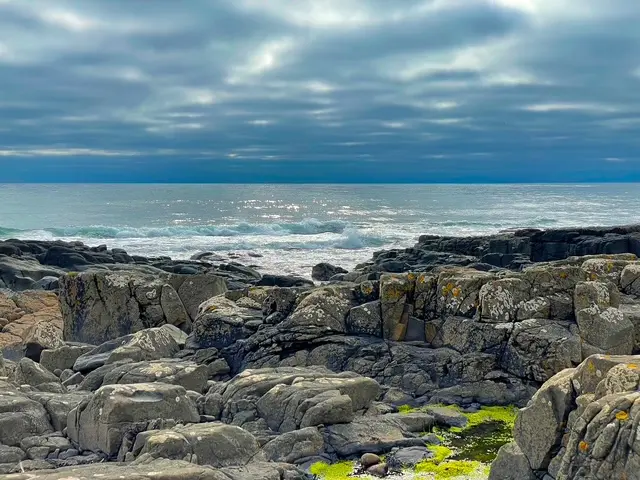
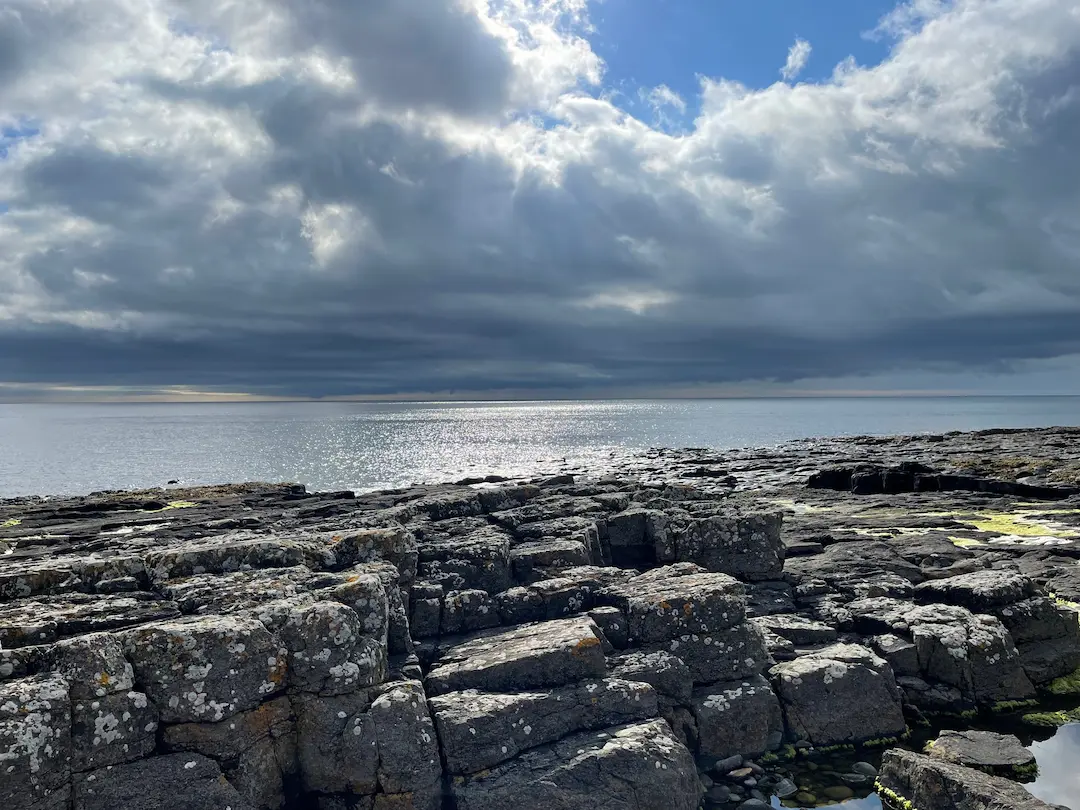
A photograph from the Northumberland coast
A Meditation on Release
This meditation uses the image of a car windscreen and wipers as its central metaphor for the movement of thought. The listener settles into stillness, notices what they are carrying, and then watches as a wiper moves across glass — clearing, filling, clearing again.Nothing is forced away. A specific concern is brought gently into view, rested on the glass, and moved aside by the wiper's natural motion. Thoughts can pass without needing to be held or pushed away.
Read transcript
Before we begin, take a moment to settle. Allow yourself to arrive just as you are. The sound of the sea is there in the background, steady, unhurried.
In this meditation, we will gently explore letting go. Not by trying to force anything away, but by allowing what is held to soften and to move on in its own time. There is nothing to achieve, nothing to make happen, only a quiet invitation to notice and to release.
Find a comfortable position, sitting or lying down. Allow the body to be supported. Let the eyes close. Bring your attention to the body, the weight of it, the contact with what is beneath you. Let the shoulders soften, the jaw unclench, the breath settle into its own rhythm.
Now gently notice what is present. Perhaps there is tension in the body, or thoughts that return again and again, or something you feel you are carrying. There is no need to analyze, simply noticing. Let whatever is here be here for now.
Now imagine you are sitting quietly in a car, looking out through the windscreen. It may be raining lightly, or there may be marks on the glass, things that blur the view. And then the wipers begin to move, slowly, gently, across the glass, clearing a space. As the wipers move, the surface becomes clearer, and then slowly it fills again, and clears again. Nothing is held, nothing is kept.
In the same way, thoughts can pass through, appearing and then moving on. There is no need to hold them, no need to push them away. Just allowing them to be cleared, again and again.
Now, if something specific is present for you — a worry, a tension, something unresolved — let it come gently into awareness. And now, imagine it resting on that glass, seen clearly, just for a moment. And as the wiper moves again, it is gently moved aside. Not forced, not rejected, simply no longer held in place. You do not need to follow it, you do not need to bring it back, just allowing it to pass. Again, the glass becomes clear, and then marked, and then clear again. This is natural. Nothing needs to stay, nothing needs to be held.
Each time something appears, it can be met and then allowed to move on. Now let the image soften, return to a simple awareness of resting. The body supported, the breath quiet. There is nothing you need to hold together, nothing you need to resolve right now. For this moment, it is enough to rest.
As this meditation comes to a close, allow everything to remain light. There is nothing to gather back, nothing to carry forward, only a little more space.
If you are resting, you may remain here. If you are returning, begin to notice the body again, gently, in your own time. You do not have to hold on. Things can pass, and you can rest.
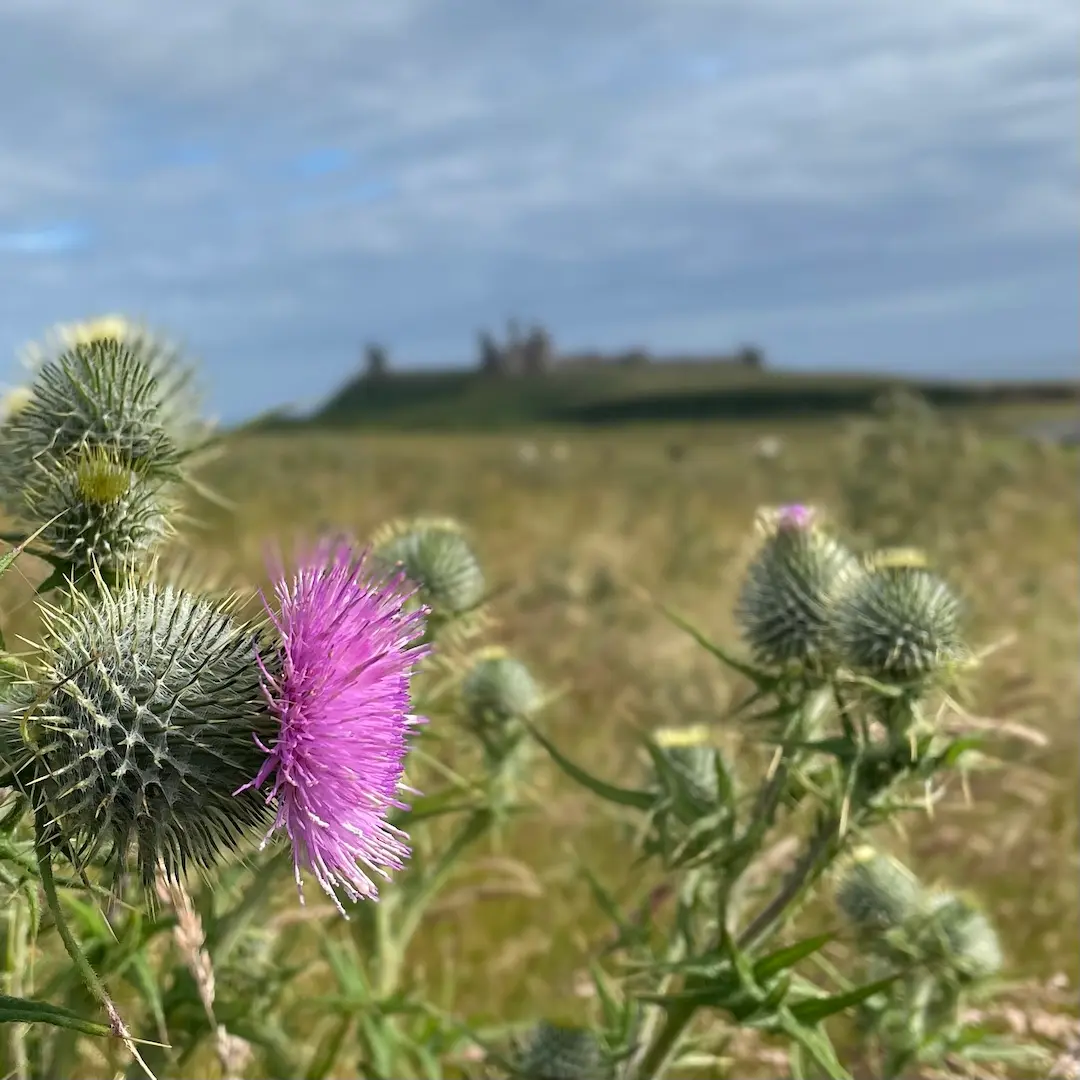
A photograph from the Northumberland coast
Into the Sea
This meditation places you at the edge of the sea and uses the image of placing something into the water as its central act of release. You are guided to bring one specific thing to mind — a worry, a weight, something unresolved — and carry it to the water and set it down.The sea receives it without judgement. The meditation closes with empty hands, quiet breath, and the suggestion that some things can be placed down and left for a while.
Read transcript
Before we begin, take a moment to settle, as though you are standing quietly at the edge of the sea. The sound of the water moving in and out is steady and unhurried. In this meditation, we will gently explore letting go. Not by forcing anything away, but by allowing what we are holding to be placed into something wider, something that can hold it for a while. There is nothing to achieve, nothing to make happen, only a quiet invitation to notice and to release.
Find a comfortable position, sitting or lying down. Allow the body to be supported. Let the eyes close. Bring your attention to the body. The weight of it. The contact with what is beneath you. Let the shoulders soften and the jaw unclench. Let the breath settle into its own rhythm.
Now gently notice what is present. Perhaps there is tension in the body, or thoughts that return again and again, or something you feel you are carrying. There is no need to analyze, simply noticing. Let whatever is here be here for now.
Now, if something is present for you — a concern, a weight, something unresolved — allow it to come gently into awareness. Not everything, just one thing. Let it be seen just as it is.
Now imagine yourself standing at the edge of the sea. The ground beneath your feet. The air around you. The sound of the waves. You are holding this one thing. Not tightly, just aware of it. And now gently place it into the water. Not throwing it away, not rejecting it, simply placing it into something larger. The water receives it without resistance, without judgement. You may notice it moving with the tide, not disappearing, but no longer held by you. It may drift or settle, or move beyond your sight.
You do not need to follow it. For now, it is enough that it is not in your hands. It is held elsewhere, in something wider than you. You do not need to solve it, you do not need to carry it, not in this moment.
Now notice your hands, empty, light, nothing to hold. Feel the body again. The breath. The quiet space within. Allow yourself to rest here. Nothing to do. Nowhere to go.
As this meditation comes to a close, there is nothing to take back, nothing you must pick up again. Only a sense of space, and perhaps a little less weight. If you are resting, you may remain here. If you are returning, begin to notice the body again, gently in your own time. You do not have to carry everything. Some things can be placed down and left for a while.
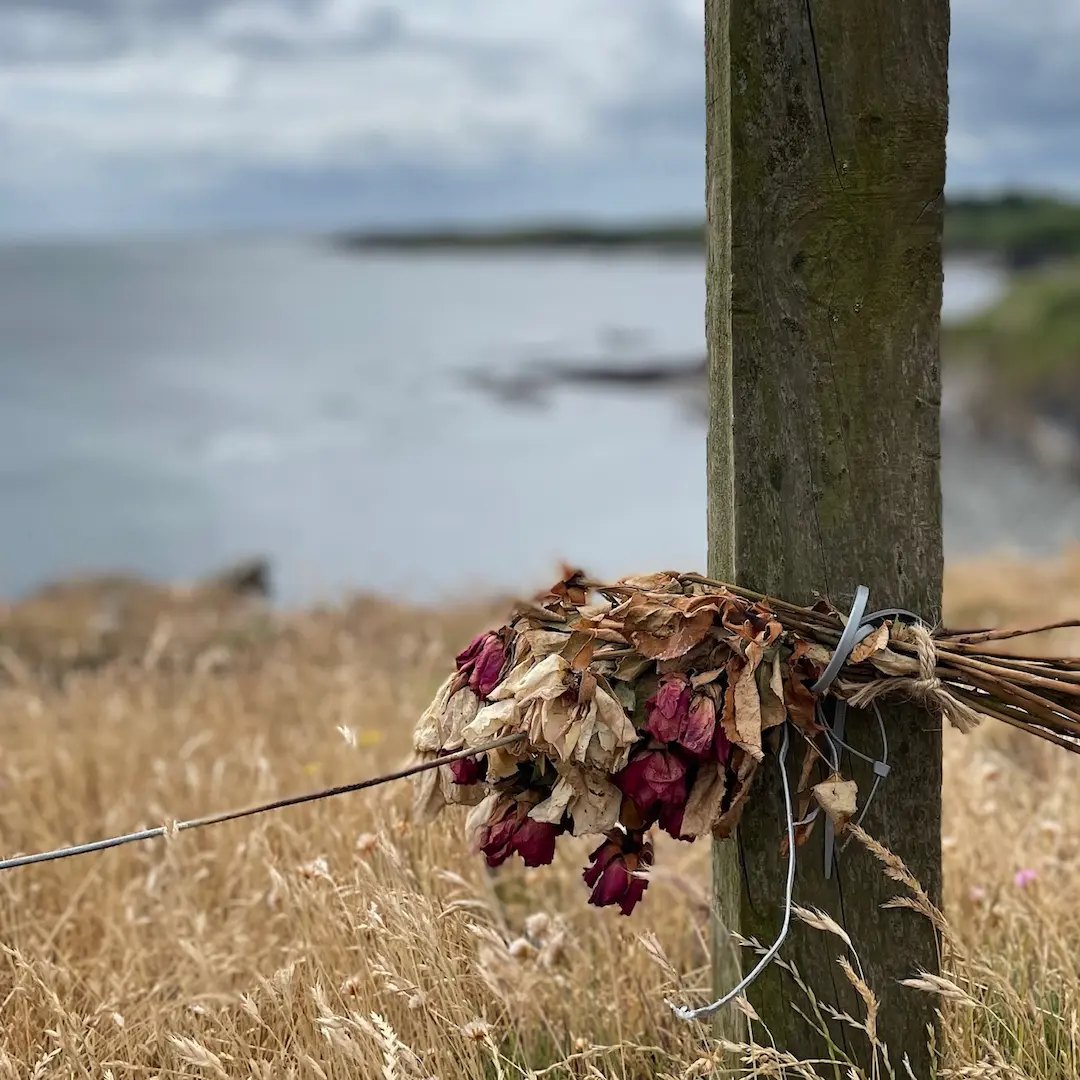
A photograph from the Northumberland coast
Staying with What Is
This meditation invites you to sit with whatever is present — not to change it, not to understand it, but to remain with it gently. There is nothing to fix here, and nothing to improve. Only an invitation to notice what is already here.Using the sound of the sea as a steady, unhurried background, it explores the difference between experience and the awareness that holds it — and the quiet space that opens when we stop trying to resolve what we are feeling.
Read transcript
Before we begin, take a moment to settle. As though you are standing quietly at the edge of the sea. The sound of the water moving in and out. Steady. Unhurried.
In this meditation, there is nothing to change, nothing to improve, nothing to fix. Only an invitation to notice what is here and to remain with it gently.
Find a comfortable position, sitting or lying down. Allow the body to be supported. Let the eyes close, if that feels natural. Bring your attention to the body. The weight of it. The contact with what is beneath you. Let the shoulders soften. Let the jaw release. Let the breath settle into its own rhythm.
Now, begin to notice what is present. In the body. In the mind. In the background of your awareness. There is no need to organise it. No need to make sense of it. Just noticing.
Something may feel clear. Something may feel uncertain. Something may feel quiet. Something may feel restless. Let it all be there.
There is often an urge to adjust things, to make them better, to make them go away. For now, you do not need to do that. Nothing here needs to be different. Even if something feels uncomfortable. Even if something feels incomplete. You can let it be as it is. Just for this moment.
The sea continues in the background. It does not hurry. It does not hold on. It does not try to become anything else. It moves. And allows itself to move. In the same way, your experience can be here, without needing to be held tightly.
Now gently remain with what is present. Not analysing. Not following every thought. Just staying close to the experience. Pause. If something shifts, let it shift. If something remains, let it remain. Nothing needs to be pushed. Nothing needs to be held.
You may begin to notice that there is space around what you are experiencing. Even if something feels strong, it is not the whole of you. It is something within your awareness. And awareness itself is steady. Quiet. Open. Allow yourself to rest in that. Not in a special state. Just in what is already here. The body breathing. The mind moving. All quiet. The sound of the sea.
Nothing added. Nothing taken away. As this meditation comes to a close, there is nothing to carry forward. Nothing you need to remember. Nothing you need to apply. Only the sense that you can pause and notice whenever you need to.
If you are resting, you may remain here. If you are returning, begin to notice the body again. Gently. In your own time. You can return to this at any time.
A companion poem from Liminal Light
Cannot see where the land stops and the sky starts Grey drizzle matching my mood, moves in with the crying seagulls The therapy of the sea lifts my mood, though it's not beach weather. Now, the line is back, a boundary in place, my mood lifting, but not to the sky Yet it's brighter.
— No Line on the Horizon